From illustrator to breeder, without ever putting down the pencil.
Fifteen years drawing basenjis before ever breeding one. Trait Pur is that sketchbook, grown into a kennel.
It started with a failed sketch.
I was an editorial illustrator when my first basenji, Zaïre, walked into my studio. I wanted to draw her in one continuous line — an exercise I did for every commission. Impossible: her ears, her wrinkled forehead, her curled tail refused to simplify. It took dozens of attempts before I got a line that truly looked like her.
That stubbornness taught me the breed before I ever bred it: the basenji doesn't reduce to a summary. You have to look at it for a long time to draw it well — and you have to know it for just as long to breed it well.
Zaïre had her first litter six years later, after I had her hips, eyes and kidney profile tested. Twelve years on, I still breed at home, in Outremont, and every puppy that leaves goes with a small booklet where I've drawn its first weeks.
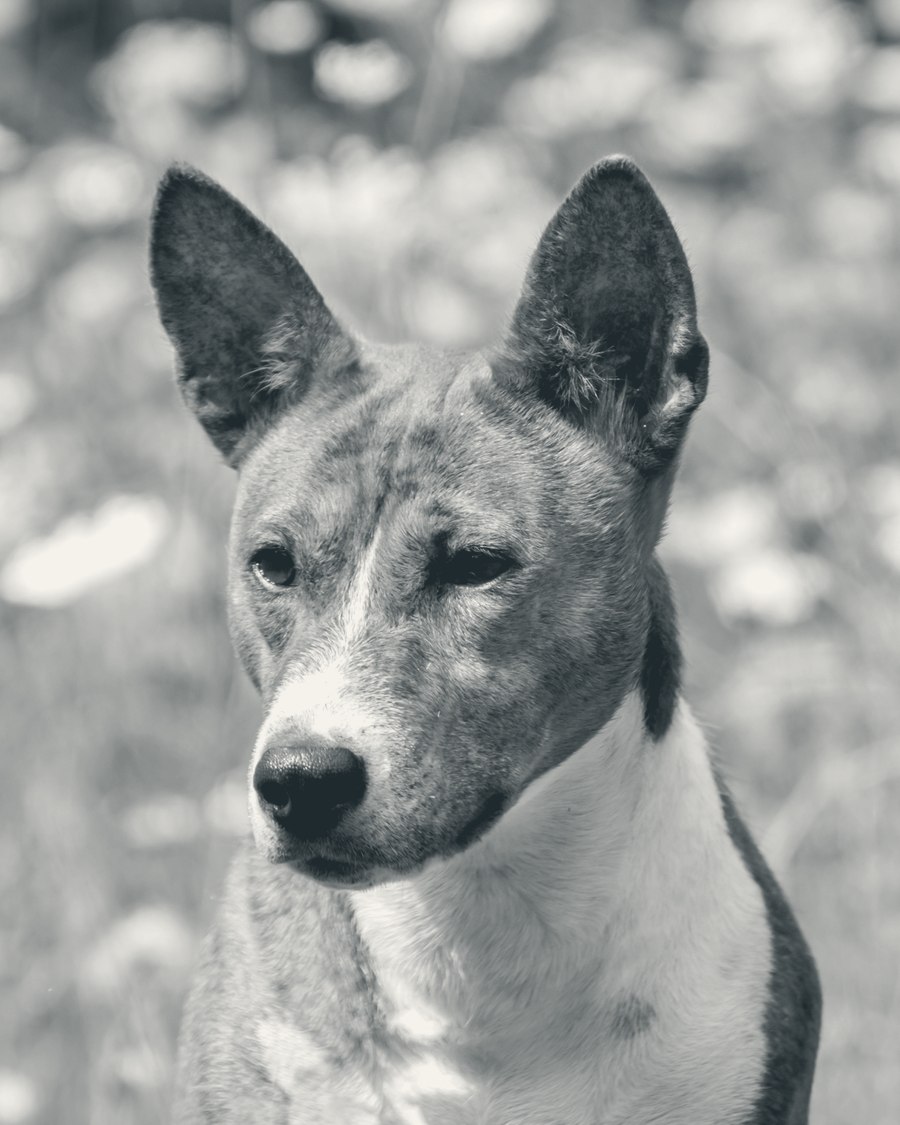
A breed you can't sum up in one sentence.
What I tell every family before we even talk about a litter — the strengths, and what deserves real thought.
The dog that sings
The basenji's larynx is shaped differently from other breeds': it can't bark, but it "sings" — a yodel called the baroo, unique to the breed, native to the Congo Basin.
Good to know: quiet doesn't mean low-maintenance. A bored basenji becomes destructive — silence never replaces exercise.
Clean as a cat
It licks and grooms itself, carries almost no body odor, and sheds very little. It's the trait that wins over the most families — rightly so.
Good to know: a clean coat doesn't mean an obedient dog. It's an independent thinker that often decides for itself whether a command is worth following.
A strong prey drive
Bred to hunt small game in Central Africa, the basenji keeps a sharp chase instinct. A properly fenced yard is non-negotiable.
Good to know: excellent with the family's own children, less predictable around small animals that run — cats, rabbits, squirrels.
The basenji is not an easy first dog. It suits active families ready to live with an intelligent dog that negotiates — not those looking for the instant obedience of a herding breed. I say so plainly from our very first conversation.
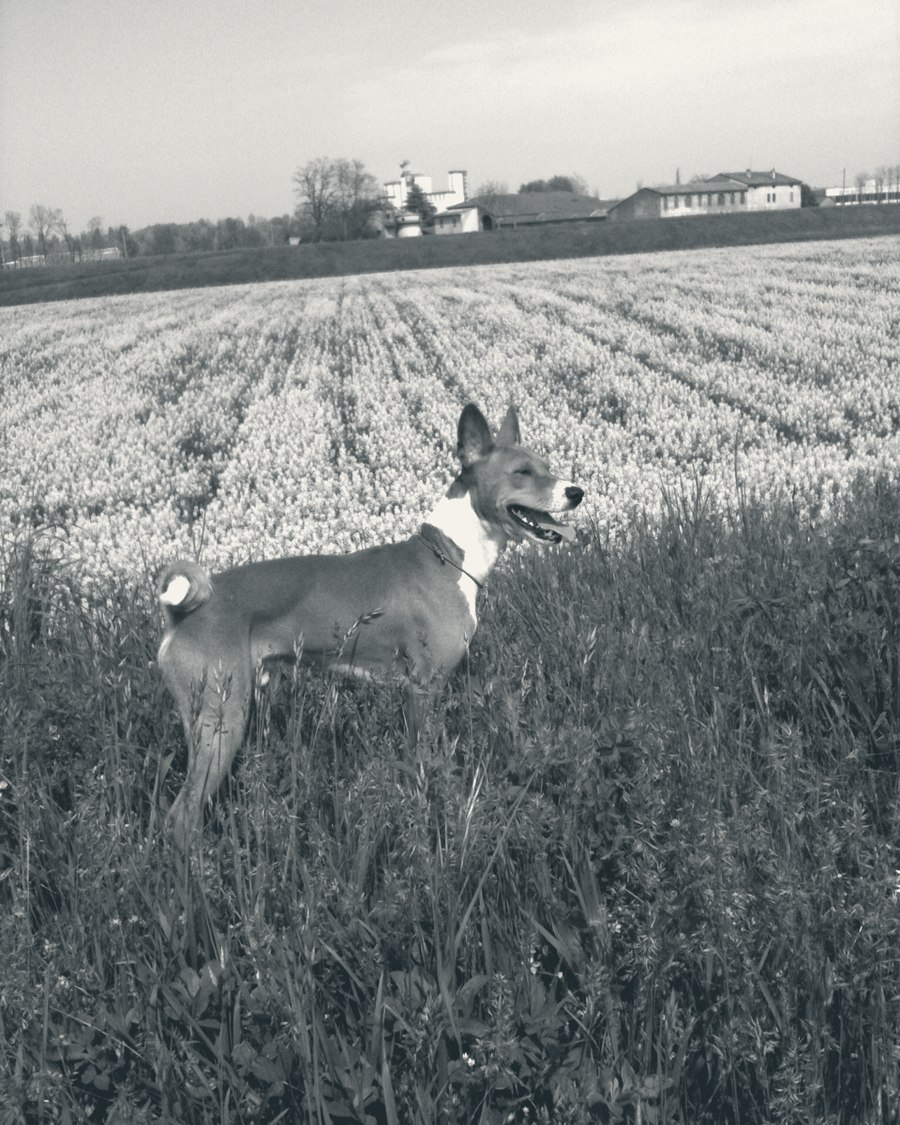
What I test for, and what I guarantee.
No mating happens before both my breeding dogs have passed the testing recommended for the breed. Certificates are handed to every family in person — never summarized, never "available on request."
Fanconi syndrome
Mandatory DNA testing on both parents. This kidney disorder is well documented in the breed; no mating between two carriers, ever.
Hips and patellas
Orthopedic evaluation before mating — a light breed, but the evaluation stays systematic regardless.
Eyes (PRA)
Annual ophthalmological exam by a veterinary specialist, screening for progressive retinal atrophy.
Two-year guarantee against serious hereditary conditions, provided in writing. Replacement or refund, your choice.
Come see before you decide.
I welcome families by appointment, even without a firm plan yet. You'll see where the puppies are born, meet the parents, and I'll show you far more than a photo ever could.
One piece of advice, even if you don't adopt from me: be wary of any breeder who refuses to show you the mother or offers to meet in a parking lot. It's the most reliable red flag there is.